To provide the best experiences, we use technologies like cookies to store and/or access device information. Consenting to these technologies will allow us to process data such as browsing behaviour or unique IDs on this site. Not consenting or withdrawing consent, may adversely affect certain features and functions.
The technical storage or access is strictly necessary for the legitimate purpose of enabling the use of a specific service explicitly requested by the subscriber or user, or for the sole purpose of carrying out the transmission of a communication over an electronic communications network.
The technical storage or access is necessary for the legitimate purpose of storing preferences that are not requested by the subscriber or user.
The technical storage or access that is used exclusively for statistical purposes.
The technical storage or access that is used exclusively for anonymous statistical purposes. Without a subpoena, voluntary compliance on the part of your Internet Service Provider, or additional records from a third party, information stored or retrieved for this purpose alone cannot usually be used to identify you.
The technical storage or access is required to create user profiles to send advertising, or to track the user on a website or across several websites for similar marketing purposes.

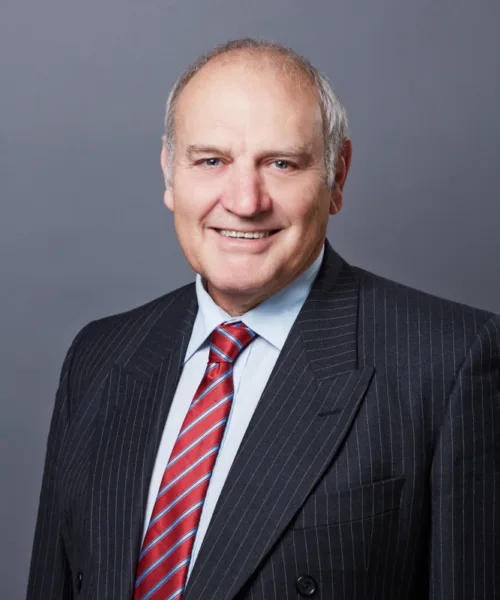
Chambers are greatly saddened to announce the death of Leigh Sagar on Friday 14 August.
Leigh’s journey to English law was unconventional. He was brought up in what was then Bulawayo, Rhodesia, the son of a butcher. Playing the guitar and the organ, in his teens he joined other musicians and they formed Otis Waygood, a blues band; the name was adapted from that of the maker of the lifts found around Bulawayo. They had considerable success, especially in South Africa, in the late 1960s and 1970s.
Life as a travelling musician, however, is tiring and the authorities in Ian Smith’s Rhodesia did not care for wayward music and more than shoulder-length coiffure, Leigh’s being spectacular. So he came to England and, perhaps surprisingly, qualified as a barrister, being called by Lincoln’s Inn in 1983. He joined us soon afterwards in 12 New Square and then New Square Chambers, the successor set, where he spent his whole professional life, never retiring. Without help from an American law school, he also qualified as a New York attorney. In chambers he developed a broad Chancery practice but specialising in wills and estates.
Always interested in IT – he had a science background – and always willing to help those less accomplished than himself, he developed an expertise over the last decade or so in cryptocurrencies and digital assets generally, and was much in demand for that knowledge. He wrote from scratch The Digital Estate, published by Sweet & Maxwell, the first book on its subject and now in its second edition. He had a great talent for exposition, writing simply and with exceptional clarity, and was a strikingly able speaker, easy to listen to and capable of conveying complex notions to an audience unfamiliar with them.
His interview before he joined chambers I recall well, not knowing that I was meeting someone who would be a friend as well as a colleague. He had been a member of chambers for some forty years. Leigh was marvellous company, cheerful, relaxed and modest, generous with his time and welcoming to newcomers to chambers, whether as pupils or members. We shall miss him greatly.
Nicholas Le Poidevin, K.C.
New Square Chambers, Lincoln’s Inn
17 August 2026